When Systemic Failure Stops Being a "Their Problem" and Becomes an "Our Problem"

For generations, a significant portion of America has lived with a simple, brutal truth: the systems designed to protect and uplift citizens do not work for them. In fact, these systems often work actively against them. This has not been a secret, but rather a chronic condition narrated in the lived experiences, protests, and scholarship of Black, Brown, and Indigenous communities. It is the story of a criminal justice system that functions as a feeder into a for-profit incarceration complex, of economic policies that widen chasms of inequality, and of a political structure that treats citizenship as a tiered privilege.
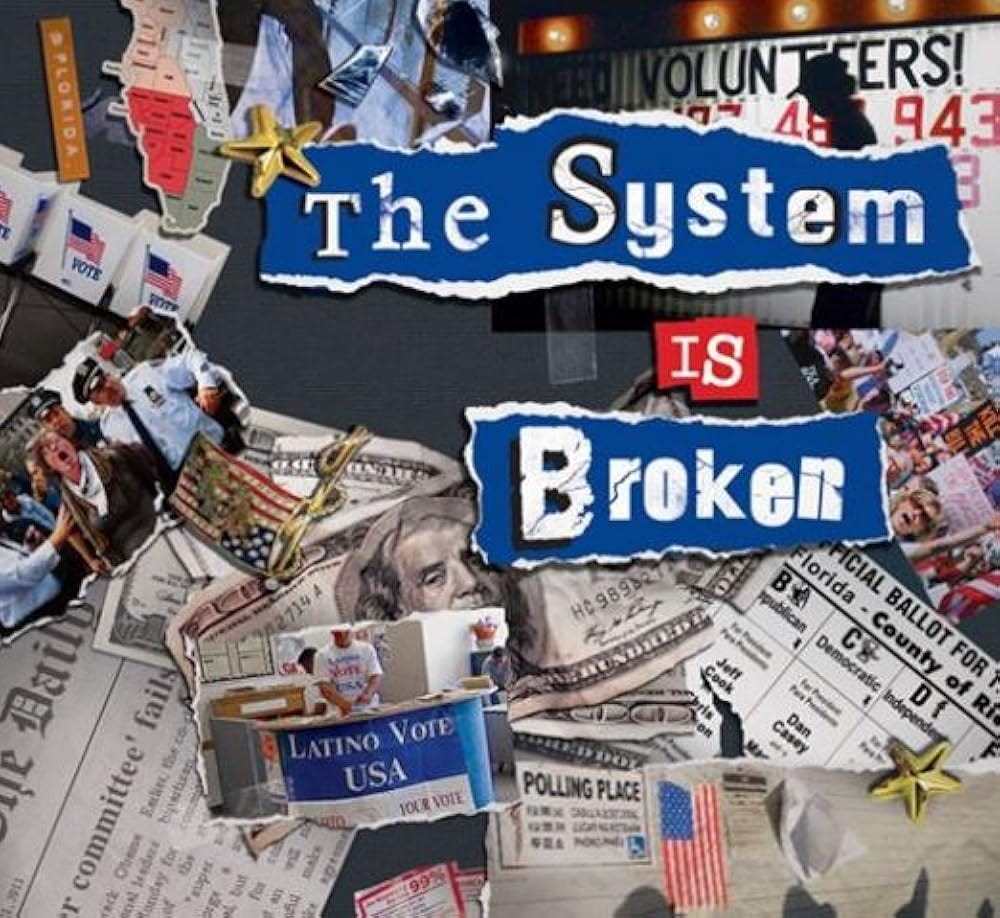
The core argument is this: What faces America today as a novel, national crisis is not novel at all. It is the long-standing, systemic failure of the governmental system, once contained to marginalized communities, now metastasizing into the mainstream.
The question is not why these systems are failing, but why are so many only now waking up to the reality of the failure?
The uncomfortable answer: because it is increasingly affecting white people and the insulated middle class.
The Canary in the Coal Mine: A Justice System Built on Extraction
For decades, the U.S. has pursued a policy of mass incarceration disproportionately targeting Black and Brown men. The language of "reform and rehabilitation" was replaced with the logic of the ledger. We began paying private corporations to "house" our citizens, creating a perverse financial incentive to fill beds and cut services. Families and communities, particularly communities of color, were stripped of their fathers, brothers, and sons. This was not a hidden process; it was a documented, deliberate policy choice justified by rhetoric around "law and order" and the "war on drugs." The brokenness was a feature, not a bug, for those it entrapped. The crisis was private, borne by shattered families, not a public emergency demanding national soul-searching.
Now, ICE, as economic despair, the opioid epidemic, Epstein crimes, and systemic neglect reaches into predominantly white rural and suburban communities, the same carceral machine grinds up a new demographic. Suddenly, the conversation shifts. The human cost of a punitive, profit-driven system becomes a "national tragedy," rather than a statistical inevitability for "those people."
The Hollowing Out: From Commonwealth to Commercial Convenience
A parallel erosion has occurred in our economic and social infrastructure. Public investment has steadily shifted from collective goods (schools, public transit, parks, utilities, regional economic development) toward subsidizing commercialization and private convenience. The result is the strip-mailing of America, the decay of Main Street, and the evaporation of communal spaces. Wealth aggregates upward at an accelerating rate, not as a byproduct of innovation alone, but as a consequence of policy: tax structures, deregulation, and the defanging of antitrust enforcement.
Communities of color have long experienced this as divestment through redlining, food deserts, and underfunded schools. The loss of community was enforced by policy and violence. Today, the same forces produce a broader alienation: the decaying town square, the shuttered factory, the gig-economy precarity, and the pervasive sense that the "American Dream" is a rigged game. The rich get richer, while the foundational floor of dignity and stability rots away for everyone else. What was once a targeted inequity is now a generalized malaise.
The Betrayal of the Compact: By the Rich, For the Rich
The U.S. Constitution was conceived as a living document, anchored by the radical, immutable principle of a government "by the people, for the people." Yet, through legalized lobbying, Citizens United, and regulatory capture, we have witnessed a silent coup by the two most powerful political parties - the Democratic and Republican. Our government has morphed into one by the rich, for the rich. This elite class has increasingly operated with a sense of exemption in our government from financial crisis accountability, from pandemic suffering, from the very laws they help write including the “Big Beautiful Bill” funding ICE, etc. The President’s profiting from the assets of Americans including its building, national parks, chips, immigration, taxes, and more.
When the sense of exemption is total, the final step is the consolidation of power by force and fear. We see this in the weaponization of agencies like ICE, which operates with a terrifying, extra-constitutional aura, separating families and conducting operations that instill terror in communities. We see it in the pervasive, unaccountable data collection by both corporations and the state, creating a surveillance panopticon where every digital footprint can be used for commercial exploitation or social control. This is not governance; it is a security apparatus protecting an asset class.
The Awakening: A Painful, Necessary Convergence
The "waking up" is not a moment of enlightenment, but one of convergent experience. The systems of punitive justice, economic extraction, and unrepresentative governance can no longer be contained within the borders of marginalized zip codes. They are spilling over. The water crisis in a majority-Black city and the crumbling lead pipes in a majority-white Appalachian town are symptoms of the same disease: infrastructural abandonment. The overdose death in a hollowed-out factory town and the death of a Black man in a for-profit prison are tragedies stemming from the same philosophy of disposability. The shooting of Alex Pretti and Renee Good has taken over the headlines because it was videotaped, but also because they were white middle-class Americans. But there are numerous other examples of other Americans being killed, imprisoned, shot, attacked every day whose names are not reported on because they are black and brown. This convergence presents a profound, if painful, opportunity. The lived expertise of communities that have endured and resisted these systemic failures for generations is the most vital resource we have. They have built networks of mutual aid, practiced resilience, and articulated the critique long before it was fashionable.
The task ahead is not for those newly awake to "save" a system they are just discovering is broken. It is to listen, to ally, and to join the long-standing struggle to tear down and rebuild that system from its first principles: a government truly of, for, and by all the people. The alarm has been sounding for centuries. It's just that now, more ears are forced to hear it. The question is whether we will finally heed it, together: No one is above the law!